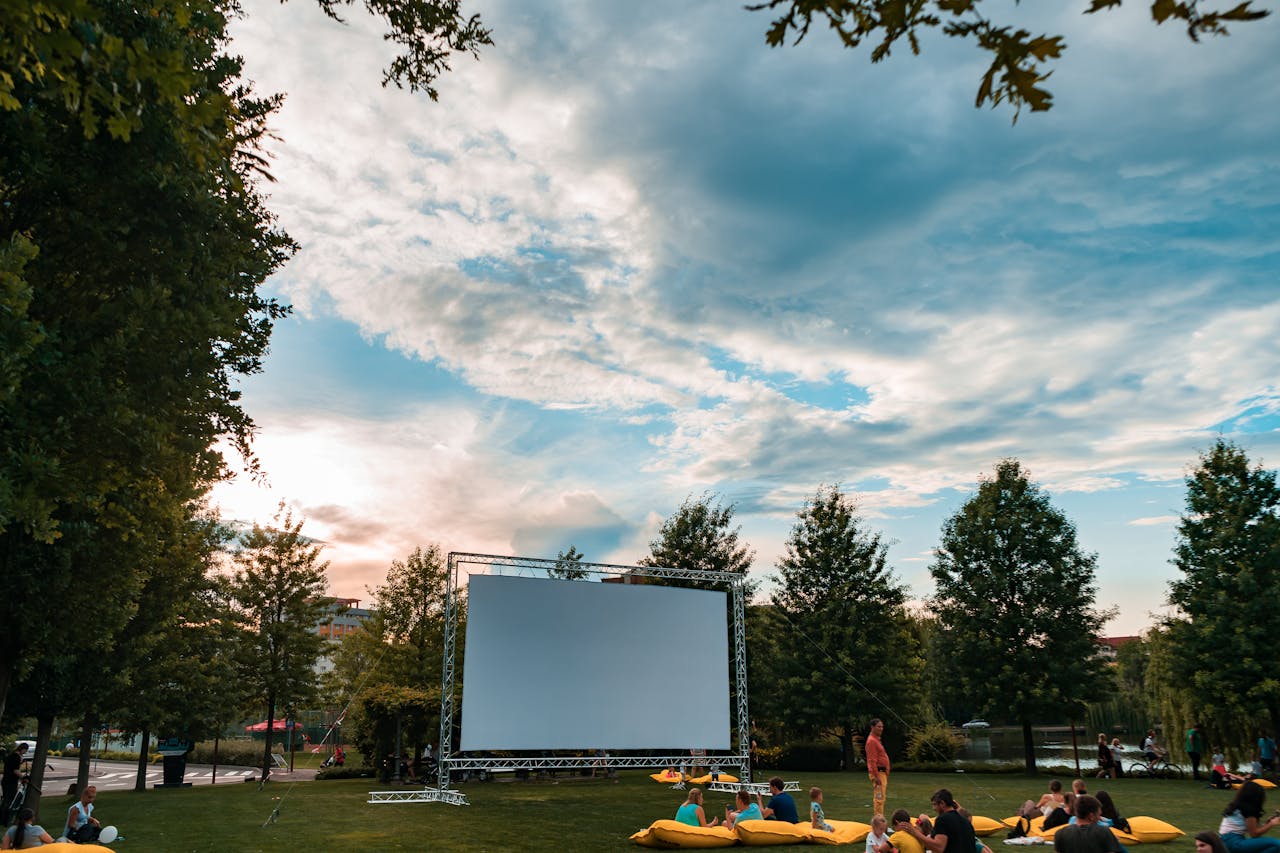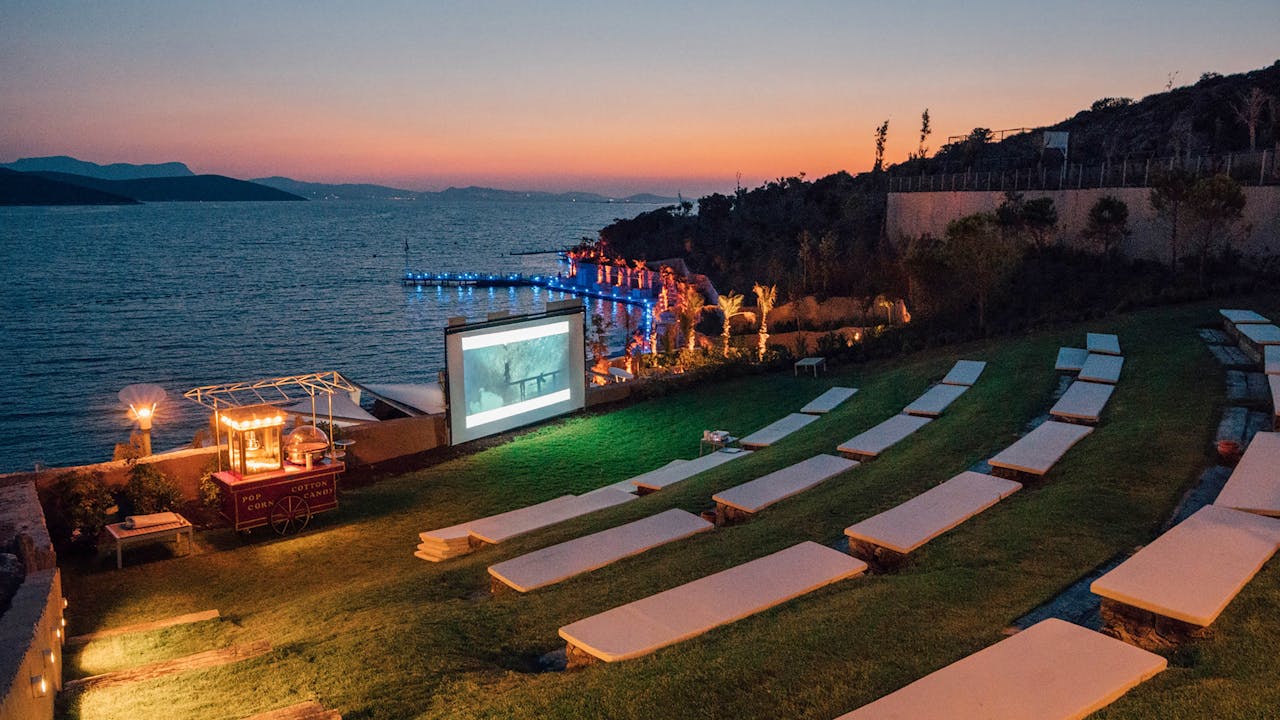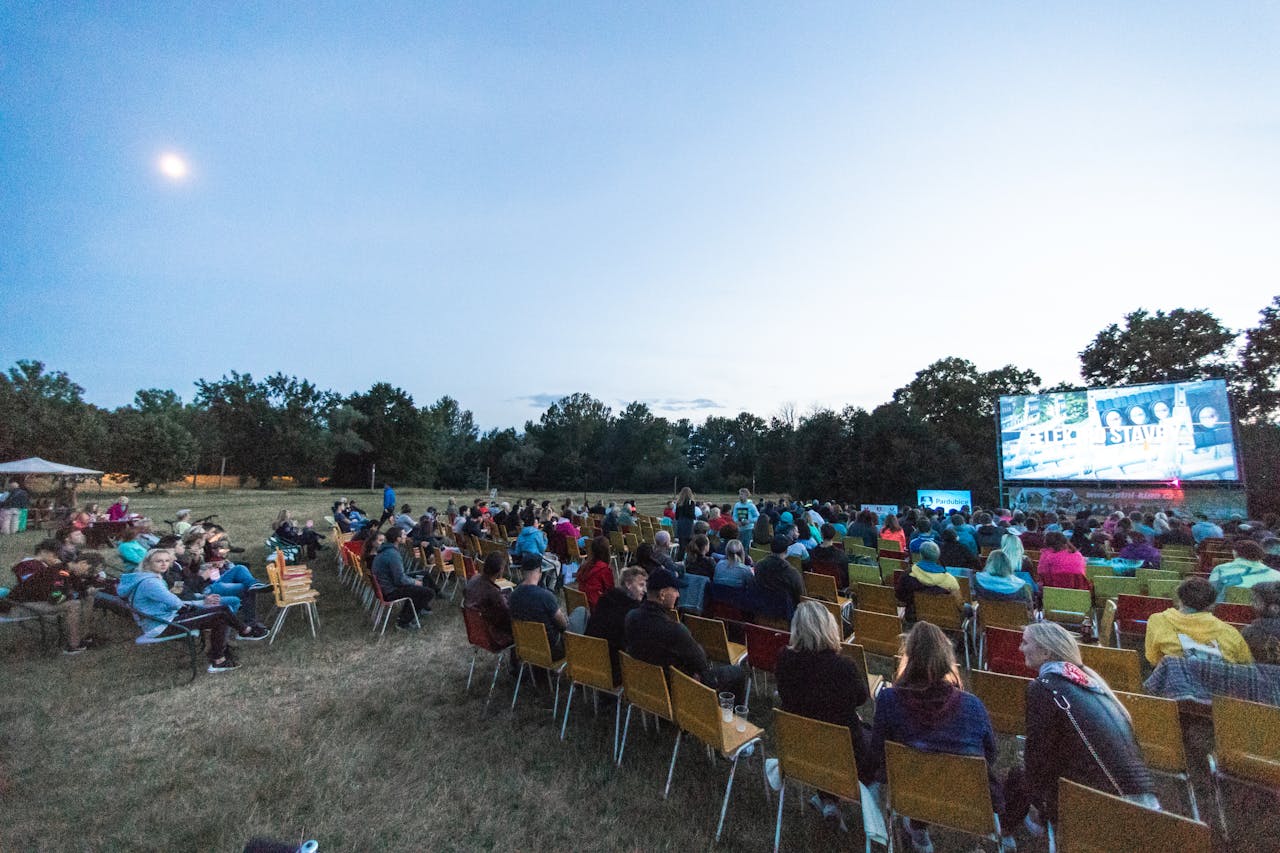
To the audience, a ParkMozi night feels effortless: the film begins, the sound is clear, the picture is sharp, and the atmosphere is electric. But behind the scenes, a highly choreographed operation unfolds — one that begins hours before the first guest arrives.
Here’s a look behind the curtain at what it takes to create a flawless open-air screening.
1. Choosing the perfect location
Every ParkMozi night begins long before the equipment arrives. The team scouts locations with several key factors in mind:
- ambient noise levels,
- natural seating layout,
- wind direction,
- light pollution,
- accessibility,
- and audience capacity.
Parks and rooftops often come with unpredictable variables — passing traffic, sudden lights, or uneven ground — so each site is tested multiple times before the event.
2. Mapping out the space
Once a site is chosen, the layout process begins. This determines:
- where the screen will stand,
- where the projector will be placed,
- the ideal audience viewing angle,
- spacing between blankets and chairs,
- emergency paths,
- and sound distribution.
The layout must balance safety with comfort, ensuring every guest has a good view without overcrowding.
3. Weather monitoring becomes an obsession
Outdoor cinema is deeply dependent on weather.
Even a light breeze can shift the screen; humidity affects sound; unexpected rain can force delays.
The ParkMozi crew checks:
- temperature patterns,
- wind speed,
- humidity levels,
- precipitation probabilities,
- and even sunset timing.
Weather apps are refreshed constantly throughout the day. When necessary, backup dates or indoor alternatives are prepared in advance.
4. Setting up the screen & projector
The screen is the first major structure to go up. It must be stable, level, and secure, especially in windy environments. Once it’s in place, the projector is aligned — sometimes requiring millimeter-level precision.
The team checks:
- brightness levels,
- focus,
- color calibration,
- keystone correction,
- and throw distance.
A single misalignment can distort the entire film experience, so the setup is tested repeatedly as dusk approaches.
5. Sound engineering under the open sky
Sound is the most challenging element. Parks absorb and scatter audio in ways theaters never do.
The team places speakers strategically to:
- avoid echo,
- balance volume across the audience,
- minimize spill to nearby residents,
- and maintain clarity during quiet scenes.
A full sound rehearsal runs with test clips, speech samples, and music tracks.
6. Light management and ambience
Open-air screenings must control ambient light carefully. Street lamps, passing cars, or nearby buildings can disrupt the image.
The team uses:
- directional lighting,
- soft lanterns around pathways,
- controlled LED strips,
- and dimmable accents around seating areas.
The goal: create a cinematic glow without washing out the screen.
7. Final checks before showtime
As guests arrive, the crew continuously monitors:
- screen tension,
- sound quality,
- wind fluctuations,
- projector alignment,
- and seating areas.
Once the sky darkens and the first frame appears, the team remains alert until the credits end — ready to adjust volume, troubleshoot issues, or secure equipment.
8. After the final applause
Breaking down the setup can take hours.
But for the crew, every late-night teardown is worth it.
A ParkMozi night is not just an event — it’s a carefully built experience crafted for the audience’s emotion, comfort, and cinematic joy.
Behind the screen, dozens of small decisions come together to create one seamless summer evening under the stars.